

You look in the mirror and notice your mustache is thick and bushy while your beard is trimmed short, or your chin is full while your upper lip looks sparse. That mismatch happens because the hair on your upper lip grows at a distinct speed, thickness, and grain compared to the hair along your jawline. A lot of guys try to solve it by running the same clipper guard across their entire face, but that doesn't fix the problem; it only makes the imbalance stand out even more. Bringing both areas into balance comes down to trimming clean edges along your lip, blending the corners of your mouth, and matching the overall bulk. Once you dial in those straightforward habits, you'll have a clean, sharp look that fits your face naturally without any guesswork.
Balancing the Build Between Your Lip and Jawline
A well-maintained beard works because everything on your lower face looks like it belongs to the same person. If your jawline carries a thick, squared-off build while your upper lip sports a paper-thin strip of stubble, your chin looks bottom-heavy and off-balance. That contrast makes the mouth look like an afterthought while pulling all the attention down to your throat. Making your mustache and beard look right together doesn't mean trimming every strand to the exact same clipper number. It comes down to balancing how much space each area fills so neither spot crowds out the other.
The outline you build along your jaw sets the rules for how you style your upper lip. A tight, boxed beard with crisp borders requires a neat mustache that stays off your mouth, leaving your smile clear and your lines sharp. If you let that upper lip turn into an untamed thicket while shaving your cheeks close, the mismatch looks accidental. In the same way, letting your chin grow long and full means your mustache needs enough length to match that presence. A heavy chin paired with a clipped, tiny mustache leaves your face looking uneven, as if half the beard gave up early.
Hair density adds another layer to the equation, mostly because genetics rarely hand out identical thickness across your entire face. Plenty of men grow thick, dense bristles under their nose within two weeks while their sideburns and jawline take two months to fill out. Letting that fast mustache run wild makes lighter cheeks look patchy by comparison. You can level the playing field by knocking down some of that upper lip bulk with a comb and scissors, which lets your jawline appear fuller. On the flip side, if your mustache is the slow-growing part of your face, giving those hairs extra time to gain length lets them lay flat and conceal any thinner patches.
Natural hair texture has a major role in how cohesive your facial hair looks from the side profile. It isn't unusual for a guy to have wiry, coiled hair along his neck and jaw while his upper lip grows straight out like stiff needles. When straight hair sits right next to tight curls without any styling, the two textures fight each other for room. Softening rough chin hair with cold-pressed botanical oils helps calm wild curls, while working a firm wax or conditioning butter into your mustache helps direct straight strands outward toward your cheeks. Getting both zones to feel pliable and sit in the same direction bridges the gap between opposing curl types and gives your face a unified, deliberate presentation.
Why Your Upper Lip Follows Its Own Rules
You can't treat your facial hair like a single lawn where every square inch behaves the exact same way. Plenty of men get frustrated when their chin fills out into a thick hedge while their upper lip looks like it's barely trying. That mismatch isn't a personal grooming failure or bad genetics; your jawline and your upper lip are governed by separate follicle behaviors that rarely line up on their own.
Getting both zones to work together starts with recognizing why they act like total strangers across these five practical realities:
-
Uneven Growth Speeds and Production Cycles: The hair follicles along your jawline stay in their active production phase for months or even years at a time, allowing chin hair to build serious length before naturally shedding. Your upper lip hairs run on a noticeably shorter cycle, meaning they reach their limit and drop out much sooner. If you run the same clipper guard across your whole face every weekend, you're constantly knocking back a mustache that actually needs several extra weeks of undisturbed growth to match the visual presence of your chin.
-
Opposing Follicle Angles and Curl Patterns: Follicles on your cheeks sit on a relatively flat plane of bone, guiding hair to lay downward in a predictable direction. Above your lip, follicles sit on a curved surface and frequently point straight outward, producing hairs that poke out like rigid bristles instead of laying flat. It's completely common for a guy to have relaxed, wavy growth along his neck while his mustache produces stiff, pin-straight strands that refuse to bend without heat or styling wax.
-
Constant Mouth Motion and Daily Muscle Strain: Your chin and jawline hair sits over stationary bone that stays still throughout the day. Your mustache, by contrast, sits directly on top of the muscle ring that controls your lips, flexing every single time you speak, chew, sip a drink, or crack a smile. That non-stop physical movement pushes mustache hairs in every direction and prevents them from settling down, which is why upper lip hair almost always feels coarser and more unruly than the hair on your cheeks.
-
The Center Philtrum Gap and Uneven Density: Roots are distributed unevenly across your face, and the small valley running beneath the center of your nose—the philtrum—is notorious for having far fewer active roots than your lower jaw. Many men have a natural gap right in the middle of their mustache while their chin is packed with dense, crowded roots. Trying to buzz your chin down to hide that gap doesn't solve anything; the real fix is letting the hair on either side of the dip grow long enough so you can train it sideways with a comb to cover the bare skin.
-
Natural Pigment Shifts and Optical Illusions: Your facial hair doesn't produce one single color tone across the board. Follicles produce their own blend of dark and reddish-blonde pigments independently, meaning you can easily have a copper mustache sitting directly above a dark brown or black chin. On top of that, gray hairs usually arrive in tight clusters, often taking over the front of the chin years before your upper lip shows a single gray strand. Because darker hair casts a heavier shadow and looks thicker to the naked eye, these natural color shifts can make an area look sparse or overly heavy even when the follicle counts are identical.
Locking in Proportions Across Every Beard Length
Pairing the right mustache style with your beard length leaves your facial features balanced instead of making your lower face look bottom-heavy or top-heavy. If you run a pencil-thin strip over a massive jawline, your chin completely overpowers your mouth, just like an overgrown walrus mustache buries a tight stubble shadow. Getting that balance right isn't about following rigid rules, but about making sure the density and length of your upper lip make sense next to the hair along your cheeks and jaw. Matching your mustache profile directly to the weight of your beard gives your face a clean, deliberate structure that looks good from any angle.
|
Beard Build |
Ideal Mustache Style |
Trimming and Blending Strategy |
Visual Traps to Avoid |
|---|---|---|---|
|
Stubble (1–3 mm) |
Clean Stubble or Light Natural Chevron |
Trim the mustache with the same short guard as your cheeks, or drop down half a millimeter if your upper lip grows particularly dense. Use scissors to clear stray hairs sitting along the top lip line. |
Letting the mustache turn bushy, which makes a clean stubble pattern look neglected rather than intentional. |
|
Short Beard (1/4–1/2 inch) |
Classic Clipped Chevron or Tapered Sweep |
Maintain clear lip clearance using detailing scissors. Blend the outer corners smoothly down into your cheekline rather than carving an aggressive vertical separation. |
Cutting a hard gap between your mustache and cheeks, creating an awkward, detached island on your upper lip. |
|
Medium Beard (1–2 inches) |
Full Natural Sweep or Moderate English |
Let the mustache gain enough length to build bulk over the lip, training the hair sideways toward the mouth corners with a light wax. Snip individual strays that dip into the mouth without stripping interior volume. |
Trimming the mustache back to short stubble, which leaves your chin looking disproportionately heavy. |
|
Long Beard (3–6 inches) |
Bold Handlebar or Full Traditional Walrus |
Grow the mustache out fully to match the jaw's deep profile. Part the strands at the center groove under the nose and sweep the bulk horizontally to merge with the descending cheek growth. |
Over-trimming the center hairs out of impatience, which hollows out your mustache and ruins connection to the lower face. |
|
Heavy Beard (6+ inches) |
Heavy Handlebar or Wide Sculpted Sweep |
Maximize mustache volume and wing width using firm wax so the upper lip can counterweight a massive chin. Comb outward to integrate the mustache wings directly into the side walls of the beard. |
Running a tight, clipped mustache that gets swallowed by the sheer volume of hair sitting below it. |
Connecting the Corners and Clearing Your Top Lip
The most common styling mistake happens right at the corners of your mouth. A lot of guys take an electric trimmer and carve a hard vertical trench between where their mustache ends and where their beard begins. Doing that turns your mustache into an isolated island, making your facial hair look broken into weird, disconnected pieces. Unless you're purposely chasing a vintage detached look or a standalone goatee, you want those strands to flow smoothly into your cheekline. Letting the outer edges of your mustache blend naturally into the hair below the corners of your mouth ties your whole face together as one solid build.
The other big trouble spot is handling the hair that hangs straight down over your mouth. Letting that growth run wild makes eating messy and hides your smile, but rushing in with trimmers is how mistakes happen. Before you snip anything, comb your mustache straight down while keeping your face completely relaxed. Don't smile, don't stretch your mouth wide, and don't pull odd faces in the mirror. If you trim your mustache while smiling, your top lip stretches thin; the second your face relaxes, those strands bounce right back up and leave you with an accidental gap floating way above your mouth.
When you're ready to clear that overhang, put down the clippers and pick up a pair of beard scissors. Motorized trimmers move fast, vibrate in your hand, and can easily chew out a chunk of hair before you have time to react. Hold the scissors flat against the line of your top lip and make tiny, deliberate cuts from the middle outward toward each corner. You only want to snip the stray tips that dip past your lip line. Taking off just a tiny fraction of an inch at a time protects the interior bulk you need for a full mustache while keeping your mouth completely clear for eating and drinking.
Building a Practical Lineup for Daily Control
Getting your mustache and beard to cooperate isn't just about how you cut them; it also comes down to what you put in them every morning and night. If your jaw hair feels soft and conditioned while your upper lip is coarse and dry, the two sections will never look like they belong together. You don't need a counter packed with dozens of bottles, but you do need to know how each formula works so you aren't overloading your face. Sticking to a lean lineup that addresses cleaning, moisture, and hold bridges that gap and gives both zones the exact support they need.
Daily Cleansing and Weekly Conditioning
Standard soaps and body washes are formulated with harsh detergents that strip away your face's natural oils, leaving your skin raw and your facial hair brittle. A dedicated beard wash is mild enough that you can use it daily to clear away trapped food, dead skin cells, and outside dust from your mustache and chin without parching your face. When you wash, spend an extra second working the lather right under your nose where sweat and skin oils tend to collect fast.
While daily washing clears away grime, you don't need to condition every single morning. Working a beard conditioner into your facial hair two or three times a week is plenty to replenish deep hydration, smooth down coarse hair cuticles, and take the bite out of wiry strands. That routine leaves your chin pliable and your mustache soft without coating your hair in heavy residues that leave it feeling limp.
The Foundation You Use Regardless
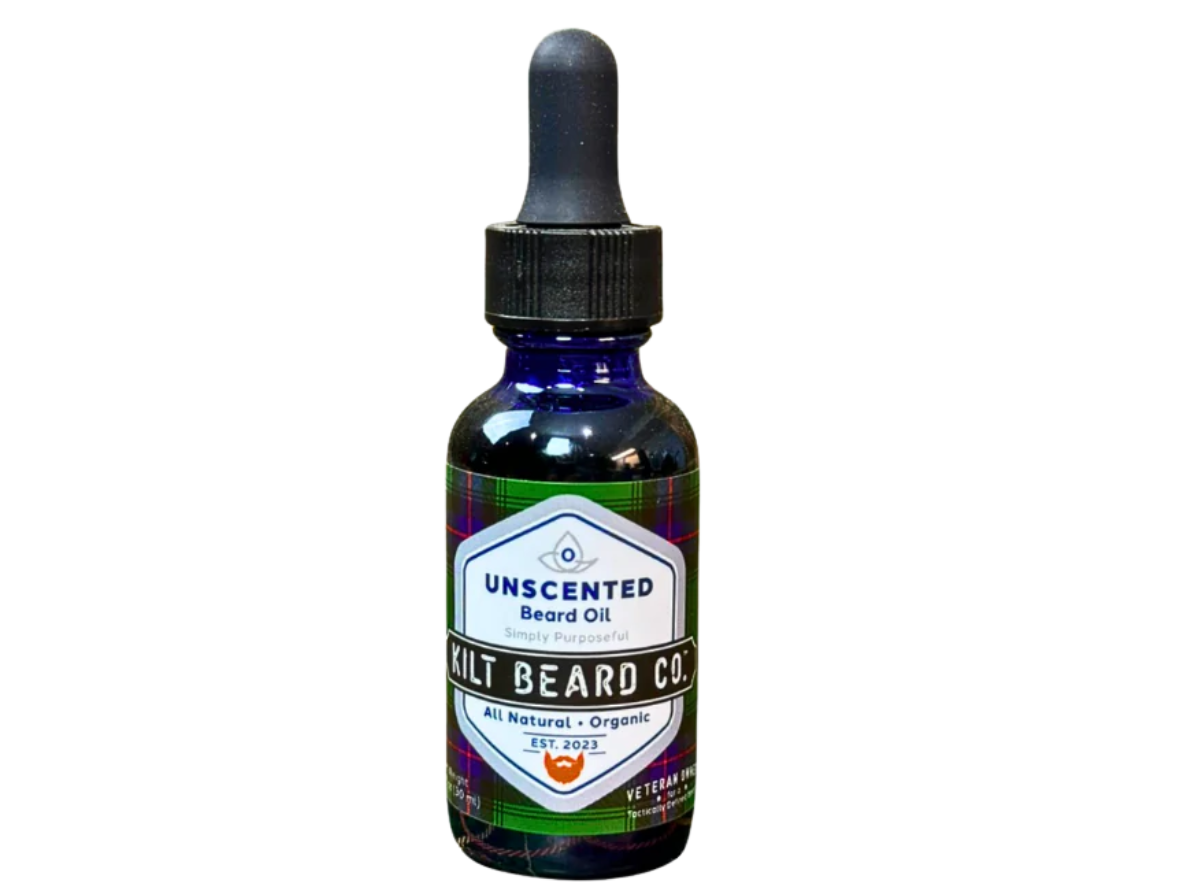
If there’s one product you never skip, it's beard oil. Lots of guys make the mistake of thinking oil is meant only for long hair, but its real job is treating the dermal layer resting underneath your growth. As your facial hair grows, each strand acts like a wick, pulling natural sebum away from your skin to stay hydrated. Once your beard reaches past light stubble, your skin simply cannot produce enough oil on its own to match that demand.
Rubbing a few drops of beard oil into damp skin right out of the shower stops itching in its tracks, eliminates flaking, and softens both your mustache and beard at the root. You apply it every single day regardless of whether your beard is a short shadow or hanging down past your collarbone.
Choosing Between Beard Balm and Beard Butter
Here’s where plenty of guys create problems: stacking beard oil, beard balm, and beard butter on top of each other all at once. Doing that is flat-out too much, turning your beard into a heavy sponge that clogs pores and weighs down your hair. Beard oil is your everyday constant, but when it comes to secondary moisture and control, you pick either balm or butter depending on your beard type and what you need that day.
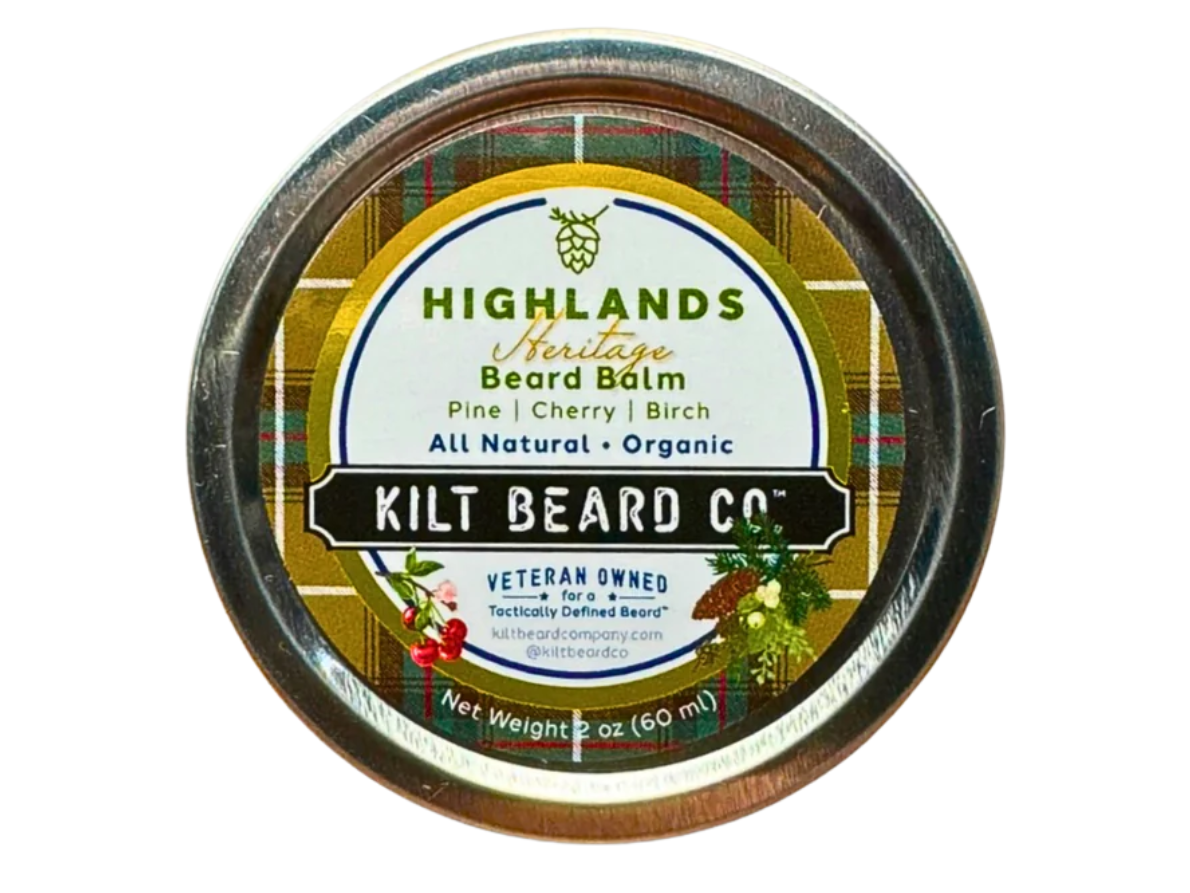
Beard balm contains natural beeswax alongside carrier oils and plant butters, giving it a light to medium hold. If you have a medium or coarse beard with stray hairs sticking out along your cheeks, balm is your best bet for daytime shaping. It seals in moisture and smooths down the outer perimeter of your beard while helping the outer wings of your mustache blend right into your cheeklines.
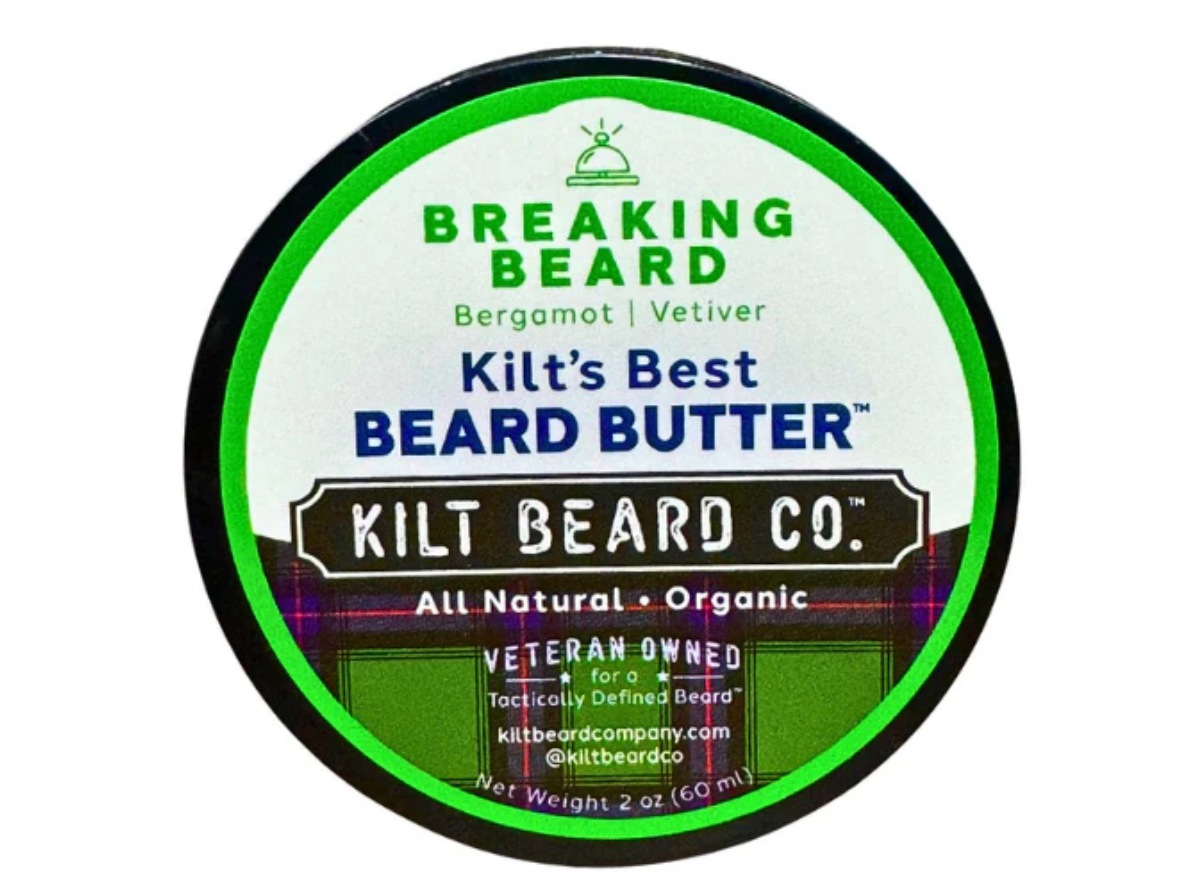
Beard butter skips the beeswax entirely, relying on whipped fats like raw sha, cocoa, or mango butter. Because there is zero wax, butter absorbs deep into the internal core of the hair fiber rather than creating a firm outer shield. If your facial hair feels dry, brittle, or stiff, butter delivers deep softening power. It works best as an evening leave-in treatment before bed, or during the day for guys with thick, tightly coiled hair who want touchable softness instead of structured hold.
Mustache Wax and Dialing in the Right Hold
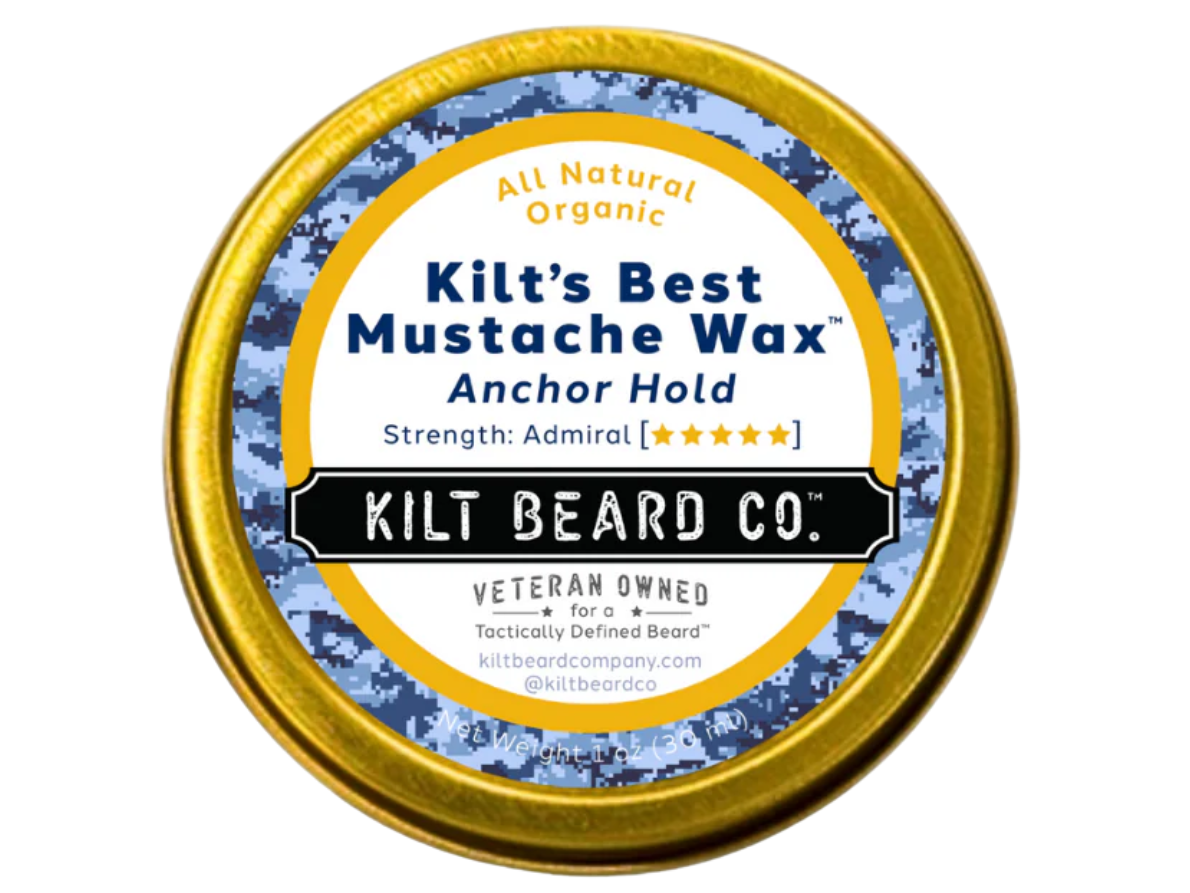
While beard balm handles general flyaways along your jaw, it rarely provides enough backbone for an unruly upper lip. Mustache hair moves constantly whenever you talk, chew, or smile, and stiff strands will push right through a light balm and droop into your mouth. Swapping out balm for a dedicated mustache wax gives you the physical strength you need to train hairs to lay sideways away from your lips.
Mustache wax lands in four distinct hold categories, and picking the right one comes down to your hair texture, mustache length, and how structured you want your style to be:
-
Light Hold: This level works best for thin, short, or fine mustaches, as well as catching casual stray flyaways. It offers a relaxed, flexible finish with a completely natural appearance, making it an easy pick for training early growth or handling daily maintenance without any stiffness.
-
Medium Hold: Best for everyday styling, standard mustaches, and relaxed or petite handlebar shapes. It delivers enough control to guide hairs away from your mouth while retaining a pliable feel that moves naturally. Most medium-hold waxes scoop smoothly straight from the tin without needing any heat source beyond a quick rub between your fingertips.
-
Strong Hold: Ideal for coarse hair, medium to long lengths, and classic styles like an English or defined handlebar mustache. It offers dependable all-day hold that stands up against heavy wind and humidity. High-hold blends still spread well once warmed between your fingers, though thicker batches benefit from a little friction or body heat before application.
-
Extra-Strong Hold: Built for long mustaches, dramatic styled curls, heavy-duty handlebars, and competition builds that fight gravity. These formulas rely on heavy concentrations of beeswax and natural tree resins to lock hair rigidly in place. Because the wax is exceptionally dense and tacky, you'll typically need an external heat source like a hairdryer or pocket warming to soften the tin before scooping and applying it to your lip.
No matter the hold, the same rule applies: Scrape a tiny bead of wax with the back of your thumbnail, warm it completely between your index finger and thumb until clear, and work it from the center groove of your lip outward toward the corners of your mouth.
Putting the Right Brushes, Combs, and Blades in Your Hands
Building a well-balanced beard setup comes down to picking reliable physical pieces that complement how your facial hair naturally grows. The brushes, combs, and scissors you reach for give you total control to guide shape, distribute daily moisture, and refine your lines with ease. Every stage of growth responds best to specific tooth spacings and bristle stiffness, helping both your mustache and jawline look their absolute best. Pairing the right implement with your daily oils, balms, and waxes makes styling effortless and leaves your entire profile looking sharp and intentional.
|
Grooming Implement |
How It Works |
Ideal Beard Size, Shape & Density |
Paired Grooming Products |
|---|---|---|---|
|
Boar Bristle Brush |
Scaled natural bristles sweep away loose surface dust, stimulate blood flow beneath the skin, and distribute natural oils evenly from root to tip. |
Size: Stubble to medium lengths (up to 2 inches). Shape: Rounded, tapered, or natural contours. Density: Best for fine to medium thickness and wavy hair that responds well to downward direction. |
• Beard Oil: Distributes drops evenly through the hair after application. • Daily Beard Wash: Helps sweep away surface skin flakes post-shower. |
|
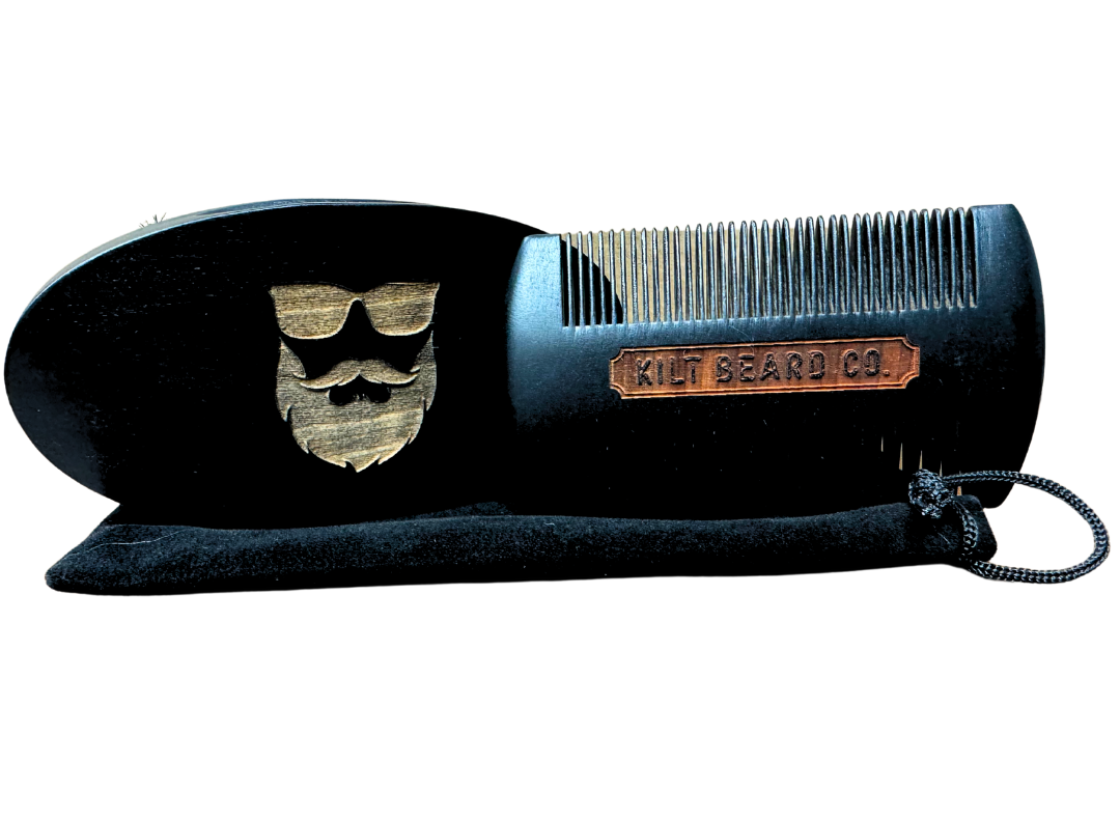
Wide-Tooth Wooden Comb |
Carved, wide-set wooden teeth glide smoothly through dense growth without generating static electricity or snagging coarse knots. |
Size: Medium to heavy beards (2 inches and beyond). Shape: Long boxed, square, or heavy woodsman builds. Density: Built specifically for thick, coarse, or tightly coiled hair that needs room to breathe. |
• Beard Balm: Distributes wax and butter evenly while shaping daytime borders. • Beard Butter: Works deep conditioning butter through long strands before bed. |
|
Carbon Fiber Comb |
Seamless, ultra-smooth teeth glide through damp or dry hair without friction, while resisting water and bathroom drops without bending. |
Size: All beard lengths from short to long. Shape: Any silhouette requiring clean, untangled lines. Density: Handles heavy density, coarse curls, and stubborn snags straight out of the shower. |
• Beard Conditioner: Combed through in the shower to soften and detangle hair. • Beard Oil: Slides through damp beard hair right after towel-drying. |
|
Fine-Tooth Pocket Comb |
Narrow tooth spacing creates precise lateral tension, allowing you to part strands at the center groove under your nose and sweep hair horizontally. |
Size: All mustache styles (clipped, sweep, or full handlebar). Shape: Pairs with any beard outline, focusing purely on upper lip clearance. Density: Works across both fine and thick mustache hair to train clean direction. |
• Mustache Wax (Light to Firm): Distributes warmed wax through the mustache to lock hairs away from the mouth. • Beard Oil: Keeps the upper lip hair soft and easy to part. |
|
Detailing Beard Scissors |
Sharp, compact stainless steel blades give you millimeter control to snip individual runaway hairs and shape along your upper lip line without taking off interior bulk. |
Size: Essential for every length from stubble to heavy beards. Shape: Perfect for detailing clean cheeklines, squaring chin profiles, and clearing the mouth line. Density: Isolates stubborn strays across sparse or thick growth alike. |
• Beard Oil or Mustache Wax: Applied beforehand so hairs lay at their natural resting length before snipping strays. |
Guiding Your Growth with Daily Direction and Good Habits
Once your daily wash and moisture are locked in, keeping your mustache and beard in sync comes down to simple repetition. You're dealing with stubborn hair that naturally wants to point in random directions, so you have to physically train those strands to lay where you want them:
-
Daily Outward Comb Sweeping: When growing out your mustache to match a thicker beard, upper lip hair naturally wants to grow straight down into your mouth. Trimming those hairs the second they touch your lip strips away the bulk you need to balance a fuller chin. Instead, run a pocket comb outward from the center dip under your nose toward the corners of your mouth each morning after applying oil or wax. Doing this steady lateral sweep trains the follicles over time, coaxing stubborn strands to lay flat to the sides on their own.
-
Gentle Heat Shaping for Coarse Strands: If your mustache hair is particularly stiff or refuses to bend with wax alone, warm air helps reset that stubborn grain. After working in your mustache wax, set a hairdryer to low heat and direct the airflow downward while guiding the hair outward with your comb. Mild heat softens the outer structure of each strand, so it bends without snapping, while a fast five-second cool blast sets that outward sweep in place for the rest of the day.
-
Awareness of Resting Facial Posture: Daily habits and facial movement have an enormous impact on how your mustache and beard sit together. Unconscious actions like biting your upper lip, chewing on mustache corners, or constantly pulling at stray hairs break down styling wax and pull strands out of line. Letting your jaw rest naturally and leaving your hands off your face prevents uneven gaps from forming, allowing your styling to hold its shape from morning to night.
-
Consistent Hydration and Core Nutrition: Strong facial hair growth starts beneath the surface, where follicles depend on steady circulation and nutrients to build sturdy fibers. Drinking plenty of water maintains skin elasticity under your facial hair, helping prevent the dry flaking and itching that can stall progress. Eating balanced meals loaded with adequate dietary protein, zinc, and healthy fats supplies the building blocks your body needs, helping your whiskers come in with rich color and natural strength.
Making the Whole Face Pull Together
Matching your stache to your beard comes down to treating your upper lip as an equal partner rather than an afterthought or a separate project. When you balance the bulk along your jawline with a clean lip line and blended mouth corners, you eliminate that jarring contrast that gives so many guys trouble. It doesn't take hours of fussing with complicated techniques, just a couple of minutes with the right products and a steady hand. Once those two halves start working together, your facial hair stops looking like two random patches and starts looking like a deliberate style that fits you properly.